
EU Hiatus
There's been something of a drought of activity here on EU over the last 6 weeks. I can only apologise but sadly other commitments make it very difficult for me to find both the time and the connectivity to post, so it may not be rectified in the immediate future.
I'll just take this opportunity to thank everyone who's still reading and I'll do my best to get some more content posted soon.
Gaskin: Balrog lacks quality
You will notice that both threads highlighted by me here are written by "Adelante". The last 8 and 16 of the last 20 threads on Balrog are written by this individual. Chris Gaskin today notes:
I have noticed the site slip in quality this last while and I intend to rectify that.
It seems that I haven't been the only one to notice Adelante's provo bigotry.
Shared Future in Schools?
Just in case there was ever any doubt that politicians are out of touch with their voters, the Belfast Telegraph reports on a survey (of "over 1,000" parents and grandparents) that finds parents want more religious mixing in schools.
- 43% would prefer their children or grandchildren to attend an integrated school.
- 67% support the establishment of jointly managed schools
- 79% supported schools sharing facilities with nearby schools, even if they were in a different school sector.
- 84% believe that integrated education is important for peace and reconciliation in Northern Ireland.
Apparently representatives of the Protestant and Catholic churches have been looking into the practicalities of setting up mixed-faith schools. The Protestant churches are singled out for being highly supportive of any moves towards inter-faith education.
So (as if I need to ask), why are none of the big 4 parties taking integrated education (of whatever form) more seriously? Could it possibly be that it's not in the interests of tribal, sectarian parties to reduce sectarianism?
Message for Negative Nigel
4-5-1 doesn't work! Healy needs a partner!
Shit results against mediocre opposition are a major let down for a side that has come so far over the past couple of campaigns.
To be fair Northern Ireland played well for the first ten minutes and the last ten. But for the rest of the match they defended, and Northern Ireland are not consistent enough at doing that to employ it as a tactic for long periods of a match. There's always someone who will make a silly mistake and give away a goal.
Slovakia were nothing to fear, so going with a tentative, negative formation and defensive tactics was a mistake. Everyone knew this before the match... except, apparently, Nigel Worthington.
TUC in economic dream world shock
The TUC still exist apparently. And they still live in the 19th Century.
General secretary Brendan Barber said extreme wealth was "socially divisive and morally objectionable".
The TUC says higher tax rates should be imposed on earnings between £100,000-£150,000 and over £200,000.
Limiting tax relief and tax avoidance measures open to the well-off could raise £5 billion, said general secretary Brendan Barber.
So the state begins to steal the fortunes of rich people. The TUC imagine not only that they will hang around to loose their money, but that this will be a perpetual £5bn income for the treasury.
Vote Labour.
Supermarkets Fighting Back on Health
A couple of days ago supermarkets were being criticised for focusing promotions too much on unhealthy foods. Just noticed this at Asda.com - who point out that the government charge no VAT on "essential foods" which includes frozen pizza and chips, but charges the full 17.5% on healthier items like smoothies and fruit juices. Asda want the government to reduce the VAT on healthy foods to 5% (which is the lowest they can go under EU law).
The government's all very good when it comes to using duties and taxes to punish "bad" behaviour like smoking, drinking or polluting. How about they put their money where their mouth is and give us a break for "good" things?
Deal Done on Maze AND Stadium?
The Belfast Telegraph reported on Monday that DCAL minister Gregory Campbell is about to scrap the Maze stadium plans. Amongst all the boring and spectacularly un-newsworthy talks between the DUP and Sinn Fein, apparently the DUPes and the Sinners have done a deal that will see the Sinners get the terrorist shrine built at the Maze along with housing as well as retail and leisure facilities, but the development will go ahead without the stadium.
Instead, Windsor Park will be upgraded, beginning with a demolition/rebuild of the Railway Stand.
It's win-win to me. While I wouldn't fancy living next to a shrine to Bobby Sands and his suicide cult, if people think they can build and sell houses there then go for it. I can't see it having a positive effect on retail either, but I suppose if there are bargains to be had people will come. As long as I don't have to go anywhere near the f**king abomination I'm happy with getting a stadium in Belfast capable of hosting Northern Ireland football matches.
Boots Capitulate to Bigoted Barsteward
 by beano
  on 04 Sep 2008 at 11:19. Categories: United Kingdom, Northern Ireland, Local Wackos, Business & Economy, Republicans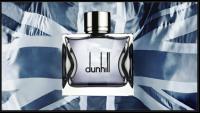
Boots in Royal Avenue, Belfast, withdrew from an aftershave marketing campaign because the t-shirts their staff were wearing featured a Dunhill Union Jack after an "easy-going fella" (who obviously hasn't been advised that self-praise is no praise) found it "offensive".
Do you know what: I'm offended too. I'm offended that Boots have deemed my country's flag offensive (inside that country to boot!). But I'm more angry that Boots would pander to such a blatantly bigoted, obnoxious, self-important, prick as this Sean Reynolds character. So I'll not be back to Boots in a hurry. I'm sure between my local chemists, the Perfume Shop and t'internet I'll not be missing out on anything.
Middle Class Catholics in Northern Ireland
by beano on 30 Aug 2008 at 15:25. Categories: Northern Ireland, Lifestyle, Sinn Fein, Business & Economy, Culture, Politics , Tags: cathoics, irish nationalists, middle-class, northern ireland, sinn fein This was initially published a couple of months ago now, so apologies to those who have read it elsewhere, but I think it's definitely worth highlighting Jim Cusack writing in the Irish Independent about how prosperous Northern Ireland, and specifically Northern Irish Poor Oppressed Filthy Rich Catholics, have become in recent years.
I've picked out the highlights below, but I'd really encourage anyone with 5-10 minutes free to read the whole article.
earlier this year, when the Rich List for Northern Ireland was published , there was one little detail that went completely unnoticed -- well over half of those on it were Catholics. Places one, two and three were all filled by Catholics. The richest part of Belfast, the Malone Road -- think Ballsbridge in Dublin 4 -- now has a Catholic majority.
...
Isn't Northern Ireland supposed to be, er, depressed, like, after three decades of terrorist violence? Aren't the Catholics supposed to be "oppressed" like Gerry Adams keeps banging on about and the Southern meeja still seems to believe?
...
Truth is, cross the Ormeau Bridge over the Lagan, up into those nice leafy streets, and the arriviste MCCs would rather be seen wearing shell suits and trainers than vote Sinn Fein. Gerry, baby: Middle Class Catholics define their social position primarily through the distance between themselves and you and your voters. About as many Catholics vote Sinn Fein in south and south west Belfast as in Dun Laoghaire. If you live in a part of Belfast that has a street sign in both Irish and English, any self-respecting MCC would cross the road to avoid you.
I'm not quite sure what to make of it. I am certain that if there is a relative increase in wealth among Catholics vis a vis Protestants then it is of their own making and based in no small part on different attitudes to education. On a brighter note, the accepted wisdom is that with money comes power and influence, so it would be nice to believe that Cusick is right and that it also brings a gulf with Sinn Fein and their brand of victimhood-based ethno-nationalism and a shift in priorities away from simply one-upping the Prods.
Crusaders / Newington Ground Share
As Chekov alluded to in a comment earlier, Crusaders FC and junior side Newington FC are planning to work together on a new stadium. Despite a meeting this morning to launch the proposals, which will include a 4,000 capacity (that's more than Deez!  ) stadium to be shared between the 2 clubs and a "Sports Educational Village", whatever the hell that is.
The Crues' web site is pretty lacklustre both aesthetically and in terms of usability so there isn't much info on the plans (it seems old news just disappears instead of being retained in any kind of archive), however they have uploaded a video on YouTube. The BBC suggests they've yet to decide between the Grove and the Valley, though I was under the impression the Grove was the preferred option as of a couple of months back.
And I've no idea what that all means for the plans to upgrade Seaview.
:: Older >>

 XML Feeds
